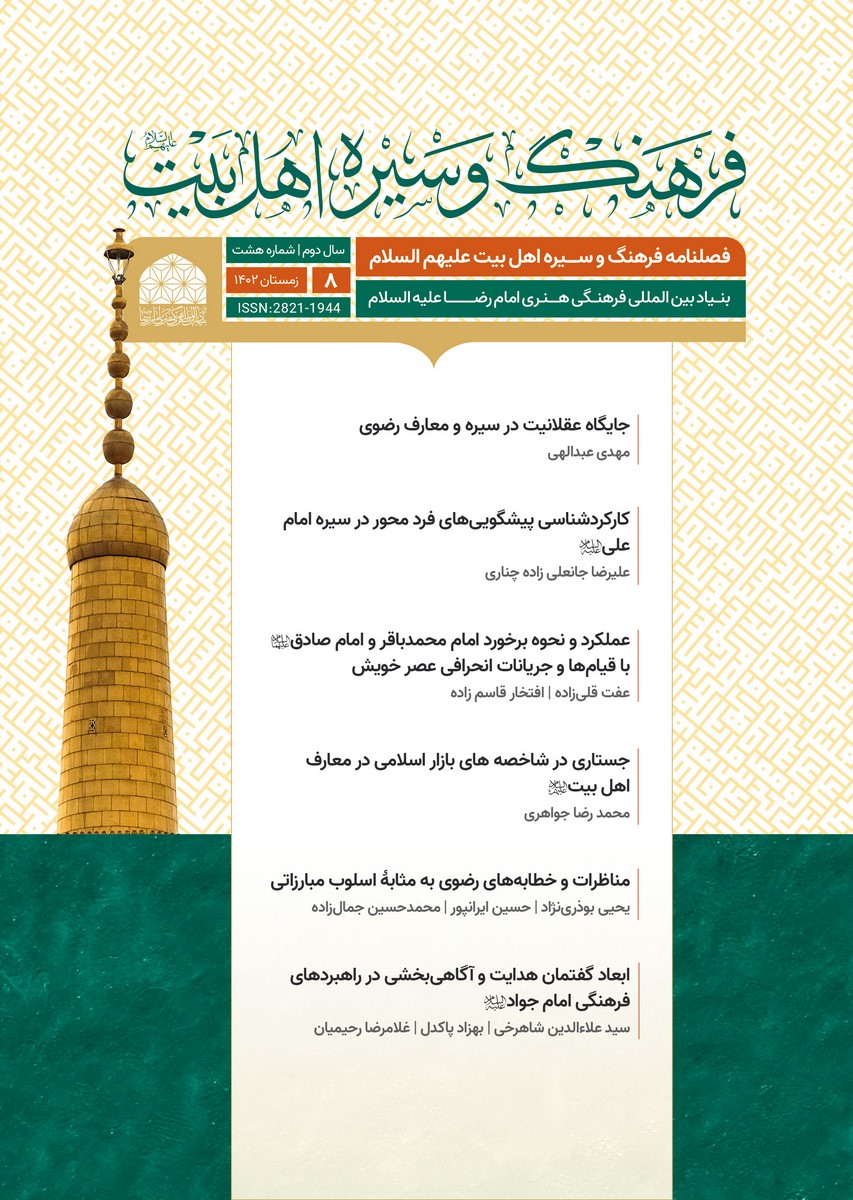


Call for articles for the quarterly "Maarif Ahl al-Bayt (AS)"

Please refer to this address: maarefahlalbayt.ir.

How to write a letter

(Dear authors! Please align it with the style sheet before uploading the article)

Receive the electronic version (ebook) of Farhang Razavi Quarterly **

Supporting university and seminary theses and dissertations related to Razavi culture and life (details)

Place of publication: Iran, Mashhad

Publisher: International Cultural and Artistic Foundation of Imam Reza (peace be upon him)

Year of publication: 1392

Specialized field: Imam Reza (peace be upon him)

Credit of the journal: scientific-research

(According to the new regulation of scientific publications, all publications included in this regulation will be known as scientific publications from now on)

Journal language: Bilingual; Persian,English

Publication date: Quarterly

Publication type: printed and electronic

Rank in the assessment of the Ministry of Science: b

Quality based on the Islamic World Science Citation Database index: Q2

The cost of reviewing and publishing the article: Yes

Type of arbitration: at least 2 referees, two-way anonymous electronic (see details)

Arbitration time: 2 to 3 months

Access to articles: free (full text)

Indexed: Yes (see details)

Similarity search: The articles uploaded in the system of the scientific-research quarterly "Farhang Razavi" are checked for similarity through a system similar to Yaab Simim Noor before being included in the judging process.


https://psas.ir  https://www.samimnoor.ir/view/fa/Default https://www.isc.ac/fa https://www.academia.edu https://www.noormags.ir/view/fa/default   https://civilica.com  https://www.magiran.com  https://library.basu.ac.ir/en     https://scholar.google.com

The Application of Semantic Network Thinking in the Life and Teachings of Imam Reza (as): Bridging Quranic Epistemology and Contemporary Cognitive Frameworks

The Application of Semantic Network Thinking in the Life and Teachings of Imam Reza (as): Bridging Quranic Epistemology and Contemporary Cognitive Frameworks

Pages 7-46

https://doi.org/10.22034/farzv.2025.501240.2067

Nematollah Firoozi, Fatemeh Moradzadeh, Asma Zohorian

Abstract In today’s complex, multidimensional world, the need for profound, multifaceted, and layered thinking is more critical than ever. This study aims to elucidate the significance of networked thinking as a pivotal tool for individual and societal growth, grounded in an analysis of the teachings and intellectual traditions of Imam Reza (AS) in promoting a culture of authentic thinking. By examining the concept of thinking and its various forms in contemporary scientific literature, as well as its semantic foundations in Imam Reza’s (AS) tradition, this article concludes that:  1. The core of his teachings lies in institutionalizing Quranic thought—a framework that transcends conventional analytical reasoning (e.g., analytical, critical, logical, systemic, creative, and future-oriented thinking) without contradicting it.  2. This Quran-anchored authentic thinking elevates beyond such reasoning, positioning itself in the human heart, where intellect and spirituality unite at their highest levels. Imam Reza (AS) emphasizes the systematic connection between the heart, language, and thought, asserting that the heart is the primary locus of reflection and reasoning, from which all human actions and speech emanate.  Strategies to cultivate this thinking include: remembrance of the Divine, self-examination, purifying the heart from impurities, contemplation of divine verses and creation, patience in adversity, encouraging inquiry, openness to truth, avoiding intellectual rigidity, reflecting on mortality, understanding the philosophy of divine commandments, and mindful silence. These practices form an overarching umbrella for other thinking paradigms—such as logical, critical, strategic, systemic, creative, and meaning-oriented thinking—by infusing thought with boundless spiritual depth and liberating it from worldly, materialistic constraints.  

The Inspiring Role of Imam Rezas (as) Teachings in Strengthening the National Unity of Iranians

The Inspiring Role of Imam Reza's (as) Teachings in Strengthening the National Unity of Iranians

Pages 47-71

https://doi.org/10.22034/farzv.2024.465121.2014

Mohammad Ibrahim Roshan Zamir, Hossein Akbari

Abstract National unity, meaning the alignment and coordination of the components of a political and social system, as the most important factor of national authority, the foundation of development and progress, and reducing internal and external threats, is of great importance for all countries. This matter is of double importance for the Islamic Republic of Iran, which is faced with the large number of efforts of the Arrogant Front to undermine its national unity. For national unity, they list several factors such as: land and territory, language, government, race and ethnicity, traditions and customs, intellectual heritage, myths and heroes, and the like, and there is a consensus about their role in strengthening national unity. But what is less mentioned is the role of religion and religious teachings in national unity; Some people even consider religion against national unity. This is despite the fact that religious beliefs have a much more important role in the stability of national unity than other factors. Considering the important role of religion and religious teachings in shaping the national unity of Iranians, it is appropriate to examine the role of Imam Reza’s teachings in this regard. The findings of this research, which is organized in a descriptive and analytical way, shows that Imam’s emigration to Iran, advice for unity and avoiding differences, justice, protection of human dignity, theoretical and practical confrontation with discrimination, moral characteristics and his respect for other sects have played an inspiring role in shaping and strengthening the national unity of Iranians in alignment with Islamic teachings and Islamic unity.

Elucidating the Identity Components of Holy Shrines in Iranian Islamic Cities: A Pilgrimage Tourism Approach

Elucidating the Identity Components of Holy Shrines in Iranian Islamic Cities: A Pilgrimage Tourism Approach

Pages 73-101

https://doi.org/10.22034/farzv.2024.464780.2012

Asghar Molaei

Abstract   Holy Shrines, as spiritual destinations for pilgrimages and excursions on urban and extra-urban scales, are considered an Iranian Islamic model in the manifestation of Iranian Islamic identity. From the perspective of Iranian Islamic identity, it is emphasized to utilize the existing areas of cities in promoting the cultural, social and economic dimensions of that city. Imamzadehs can be one of these valuable areas, an attraction for pilgrims and religious tourists, which in turn, with the arrival of religious tourists, emphasizes social homogeneity and strengthens the social identity of the city. The purpose of this article is to explain the importance of pilgrimage and Holy Shrines as an Iranian Islamic model of religious tourism in promoting Iranian Islamic identity for religious cities and to study practical solutions to strengthen this approach. This research is of a qualitative type that is carried out by describing and analyzing the content of texts and logical reasoning and documentary and library study methods. Such an approach will require planning to introduce, provide the services, facilities, and equipment needed, especially residential complexes, and design and develop the Imamzadehs in a contextual manner. In the cultural and social dimension, attracting individuals and groups of the community in a single space and instilling a religious and spiritual feeling, it is considered a sustainable cultural symbol and an unparalleled platform for displaying social identity. This contributes to the cultural and social stability of cities and provides a means to strengthen the psychological, social, and cultural security of the community. The Iranian-Islamic identity of pilgrimage settlements can be studied based on Imamzadehs as the beating heart of cities and villages. The holy shrines of Imamzadehs, while continuing sustainable life through the pilgrimage ritual, become the center of religious rituals and traditions, especially celebrations, feasts, and mourning on special occasions. In the physical dimension, Imamzadehs are located in key and structural points of cities and villages. In this regard, the connection and connection of the Imamzadeh spaces with the components and elements around them, especially the network of main and secondary passages and routes, mosques, markets and surrounding neighborhoods, is of considerable importance in the urban design of the aforementioned settlements.

Analyzing the Critical Discourse of the Ode of the Golden Chains Based on Norman Faircloughs Theory

Analyzing the Critical Discourse of the Ode of the Golden Chains Based on Norman Fairclough's Theory

Pages 103-129

https://doi.org/10.22034/farzv.2024.449402.1987

Hosein navazani, Ezzat Molla Ebrahimi

Abstract   In the mysterious world of language, critical discourse analysis opens a new window to discover the hidden layers of the text. This new approach, beyond examining the linguistic structure and aesthetics, seeks to decipher the relations of power and ideology in the text. Based on this, Norman Fairclough’s theory of critical discourse analysis, which is introduced in three levels of description, interpretation, and explanation, is one of the most efficient methods for examining texts and discovering meaning at the level of text and metatext. Suleiman al-Salman is a powerful Palestinian poet who lives in Syria and wrote an ode titled “Salas al-Dahab” under the influence of traveling to Iran and visiting Imam Reza (a.s.) in praise and praise of Imam Hammam. In a way, this poem reflects the pains of a poet who has always witnessed the sufferings of the Palestinian people following the occupation of his homeland by the Zionist occupation regime. Therefore, his poem is considered a political-social work. The current research is trying to apply Norman Fairclough’s theory of critical discourse analysis to the above-mentioned ode “Salaz al-Dahab” and explore the ideas and discourses hidden in it by relying on the descriptive-analytical method. The results of this research indicate that the poet emphasizes the position and dignity of Imamate and Wilayat in the guidance and prosperity of the Muslim community by using words such as “Al-Imam”, “Al-Wali”, “Al-Reza”, “Nur” at the level of description with an array of repetition. has done At the level of interpretation and considering the situational context of the mentioned ode, including the time and place conditions and the political-social and cultural conditions of the Palestinian and Syrian society, the author aims to create a discourse based on the resistance and stability of the Palestinian and Syrian people. At the level of explanation, the poet has created a critical discourse based on the betrayal of the normalization of relations and the compromise of some Arab rulers with the Zionist occupation regime by stating the most important reason for the martyrdom of the Imam (a.s.) which was the compromise of some community leaders with the oppressive rulers.

Theological and philosophical Analysis of Ibn Qiyamas Narrative on the Issue of Continuity of Authority (Ḥojjat) and the Presence of Two Speaking Imams in the Same Era

Theological and philosophical Analysis of Ibn Qiyama's Narrative on the Issue of Continuity of Authority (Ḥojjat) and the Presence of Two Speaking Imams in the Same Era

Pages 131-150

https://doi.org/10.22034/farzv.2024.464265.2011

Ramin Golmakani, Sayyed Ali Delbari, Mohammad Hosain Davoodi Dehaqani

Abstract The existence of divine proof at all times and its continuation until the Day of Resurrection is one of the tenets of Shia belief, even among the branch sects; Hence, even the Waqifites (Waaqefiyyah) and the opponents of Imam Reza’s (p. b. u. h) imamate came through this principle in rejecting him and denied his Imamate. However, during the narration that is analyzed in the following article, Hazrat Reza, peace be upon him, answered the deniers of his Imamate. The imamate of Imam Reza (p. b. u. h) was doubted once after the martyrdom of his noble father, and it led to the formation of waaqefiyah, and once again, the fact that he did not have children at an advanced age caused doubts among some of his followers. so that some of them converted to waaqefiya; Despite this, there was a definite belief in the continuity of divine proofs in the beliefs of the Shiites, to such an extent that even the Waqifites had no choice but to adapt their deviant beliefs to this original belief in order to achieve their goals. This article, while re-reading Ibn Bashar’s narration, explains Ibn Qiyama’s conversation with the Imam of the Waaqefiyyah group, with a verbal and ruling approach, explaining the Imamate after him. The issue of the earth not being empty of imams from a theological point of view, on the one hand, and the issue of the absence of two speaking imams at the same time from a ruling point of view, on the other hand, are two important and fundamental points in this article; that Ibn Qiyamai Waaqefi in his conversation with Imam Reza (p. b. u. h) acknowledges both of the mentioned issues. Due to the lack of specific background in this field, The innovation of this article is in this aspect, which makes it clear in an interdisciplinary way with a theological and ruling point of view, and in a descriptive and analytical method, while examining and analyzing the content of the mentioned hadith, and analyzing the various affairs of the Imamate, that the dignity of Wilayat is the only dignity that The title of Hojjat, meaning intermediary in divine grace, is continuous and manifests in only one person from the divine saints at any time and cannot be assigned to two people at the same time.

Rereading Classical Geographers’ and Travel Writers’ Reports of the Martyrdom and Burial of Imam Reza (as): From the Beginning to the End of the Qajar Era

Rereading Classical Geographers’ and Travel Writers’ Reports of the Martyrdom and Burial of Imam Reza (as): From the Beginning to the End of the Qajar Era

Pages 151-175

https://doi.org/10.22034/farzv.2025.492095.2048

Hamid reza Attariyani, Mahbouba Esmaili, Hassan Shadpour

Abstract Non-Iranian and Iranian travel writers have given different reports of the martyrdom event and then the burial of the body of the 8th Imam of Shiites in the land of Khorasan, in the year 203 AH, until the Qajar era. In this research, the reports of classical geographers and domestic and foreign travel writers about the martyrdom and burial of Imam Reza (peace be upon him) from the 3rd century to the end of the 13th century are discussed. The research community is 40 travelogues. Of these, thirty travelogues are non-Iranian and ten Iranian travelogues have also been examined. The research method in this research is quantitative and qualitative with a descriptive approach based on events taken from travelogues and geography books. This research aims to find the answer to how the event of martyrdom and the place of burial of Hazrat Reza, peace be upon her, are described in the travelogues of Europeans and Iranians? The findings of this research indicate that religious reports about the martyrdom and burial of Imam Reza (peace be upon her) were mentioned in a small or incomplete form by geographers and travel writers until the end of the 11th century. In the reports of the early centuries after the martyrdom, they did not mention the name of the murderer or the perpetrator of the martyrdom in their travelogues for any possible reason. After that, in the 12th and 13th centuries of the lunar calendar, with the integration of religious and Shiite institutions after the Safavids, in the Qajar era, due to the frequent presence of travel writers to the threshold of Al-Quds and their attention to reflection and criticism of the event and burial, reporting on the event of martyrdom. It has reached its peak in travelogues.

The Influence of Imam Reza’s (as) Justice-Centered Conduct on the Emergence of the Tahirid Civilizational Governance Model in Khorasan during the Reigns of Tahir and His Son Abdallah (205–230 AH)

The Influence of Imam Reza’s (as) Justice-Centered Conduct on the Emergence of the Tahirid Civilizational Governance Model in Khorasan during the Reigns of Tahir and His Son Abdallah (205–230 AH)

Pages 177-208

https://doi.org/10.22034/farzv.2024.462134.2003

Mohammad Baghestani kozegar

Abstract The compilation of the justice-oriented code of conduct of Ṭāhir b. Husain, the founder of the Tahirid state of Khorasan (205-251 AH/820-865 AD), is known as one of the oldest governance codes of conduct (marāmnāma) in post-Islamic Iran, which has been the subject of various researches from different perspectives. One of the aspects of interest about this code of conduct is the origin of the justice-centered ideas that Ṭāhir b. Husain has arranged in the aforementioned text. One viewpoint has tried to consider it, based on intra-textual and extra-textual evidence, as a continuation to the practice of writing letters of admonition (andarznāma) in the Sassanid era, which was established under the Islamic appearence at the beginning of the formation of the first semi-independent Iranian state in Khorasan; and another viewpoint, based on the both groups of the same evidence, considers this code of conduct to be an adaptation of the famous letter of Imam Ali (A.S.) to Mālik Ashtar. In this study, a third perspective is provided from a critical examination of these two perspectives, which considers the writing of this code of conduct and the formation of Tahirid civilizational governance during the reign of Ṭāhir and his son ‘Abdullāh (205-230 AH/820-844 AD) to be influenced by the justice-oriented sīra (mode of life) of Imam Riḍā (A.S.) during his crown princeship (wilāyat ‘ahdī) (201-203 AH/816-818 AD) in Khorasan. With this assumption and due to the historical nature of the subject, the descriptive-analytical method has also been used as the method of processing this article. The intensification of the Shī‘ī cultural atmosphere, the strengthening of justice-promotion as an important norm in governance through the construction of distinct dichotomies in the governance procedure of the institution of Imamate and the institution of Caliphate in the life of Imam Riḍā (A.S.) had a direct impact on the revival of the idea of justice-demanding among government officials, which has manifested in the form of writing a code of conduct for a just governance procedure (during the reign of Ṭāhir) and civilizational governance (with two components of justice-orientation and knowledge-promotion) during the reign of his son (‘Abdullāh), is dealt with in this research.

Criminal Justice in the Razavi Teachings

Criminal Justice in the Razavi Teachings

Pages 209-234

https://doi.org/10.22034/farzv.2025.467238.2017

Hossein Farzaneh, Maryam Fathabadi

Abstract The principle of proportionality between crime and punishment, as one of the manifestations of criminal justice, has consistently attracted the attention of scholars in fiqh and law. It is considered a key criterion of justice and recognized as a legal, rational, and religious principle as old as human civilization. Its significance in realizing justice is so profound that legal scholars view adherence to this principle as a true embodiment of criminal justice and acknowledge its acceptance across all criminal law systems. Proportionality between crime and punishment is also among the governing principles of Islamic penal sanctions and can be viewed as a result of God’s legislative justice. The foundation of this study, conducted through a descriptive-analytical method, focuses on a narration from Imam al-Ridā (A) that may be regarded as one of the bases of criminal justice within the framework of proportionality. In this narration, the Imam explains the reasoning behind the prescribed punishments for two ḥadd crimes: theft and non-muḥṣan fornication. His explanation reveals different forms of proportionality between offense and punishment, grounding this narration as a jurisprudential foundation for the principle of proportionality.

The foundations of strengthening the family institution in religious teachings
Based on the hadiths of Imam Reza (a.s.)

The foundations of strengthening the family institution in religious teachings Based on the hadiths of Imam Reza (a.s.)

Articles in Press, Accepted Manuscript, Available Online from 25 October 2023

https://doi.org/10.22034/farzv.2022.352453.1788

Fatemeh Seyfaliei

Abstract This research is written with the aim of determining and explaining the foundations of strengthening the family institution in the teachings of the Quran and Hadith and in an analytical-descriptive method, and it states that these foundations can be investigated in the verses of the Quran and the traditions of the Ahl al-Bayt (PBUH) in the two periods before and after marriage. . Since the main pillars of the family are the man and the woman, choosing a worthy spouse before marriage is the most important principle in strengthening the family institution. If the choice of a spouse is made wisely and based on stable principles, then the first step in strengthening the family institution has been taken. The most important principles for choosing a spouse; Being equal in dignity, religion, morals, and the originality of the couple's family. After marriage, good association, moderation and moderation in all stages of life, expression of love and affection, patience in problems and forgiveness of mistakes, knowing each other and mutual understanding and placing justice and fairness in relationships are the most important foundations of strengthening the family institution. They form The result is that careful selection before marriage and good and pleasant morals and good socializing after marriage are the most important factors that can build a strong and stable tent and protect the foundation of the family from possible harm and damage.

A comparative study of historical reports about the bombardment of the holy shrine of Imam Reza (a.s.).

A comparative study of historical reports about the bombardment of the holy shrine of Imam Reza (a.s.).

Articles in Press, Accepted Manuscript, Available Online from 02 November 2024

https://doi.org/10.22034/farzv.2024.469116.2022

Abolfazl Hassanabady

Abstract A comparative study of historical reports about the bombardment of the holy shrine of Imam Reza (a.s.).
The bombing of Imam Reza's shrine by the Russians on the 10th of Rabi al-Thani 1330 A.H. is considered one of the most important historical events in Mashhad. The purpose of writing this article is to introduce and review the content of a new treatise on the bombing of the shrine of Imam Reza (a.s.). In this regard, first, the most important sources available in this regard are introduced under official, including documents, and unofficial, such as books and newspapers. In the following, in order to provide the possibility of comparing their content with the treatise in question, the main topics in several axes; Types of financial and life losses, how the shrine was attacked and how the cannons were deployed, the number of bullets that hit the shrine and its location, the validation of documents and the types of poems left behind are categorized. Examining the findings of the research shows that this manuscript has been unknown until now and its information has not been used anywhere. According to the form and method of presenting the information, the author was closely aware of the incident and tried to present an accurate picture in a fair manner and deal with its various dimensions based on evidence and documents. Some of the information in the book, such as how it started and the events leading to the bombing, is shared with other sources, and in some areas, such as the people involved, financial and life losses, the composition of the military forces and the method of bombing, and the remaining poems have informational value, and in cases such as the end Yusuf Khan Herati is unique.

The scope of the trials in the personal life of Imam Reza (PBUH)

The scope of the trials in the personal life of Imam Reza (PBUH)

Articles in Press, Accepted Manuscript, Available Online from 23 November 2024

https://doi.org/10.22034/farzv.2024.469448.2024

Ali safaei niya, Yahya Mirhoseini, Ali Mohammad Mirjalili, mohammadmahdi kheybar

Abstract God's afflictions and tests are among the inevitable issues of life. Prophets and divine saints, who are God's chosen ones, were not and are not removed from this absolute divine tradition. In the religion of Islam, the Messenger of God (PBUH) has been introduced to the text of the Qur'an, as well as the Ahl al-Bayt (PBUH) to the text of the Prophet (PBUH), as special models in religious education. "Imam" is an exemplary and perfect human being for the Shias, and he is a role model from every point of view and enjoys divine protection and infallibility. Therefore, if the followers adhere to their approach in similar cases, especially the personal, political and social problems of the imams (a.s.), they can learn from their leaders and implement them in their lives to achieve the desired perfection. The effort of this research is to provide a suitable model for dealing with problems and trials, while examining the life and method of the 8th Imam (a.s.) in facing personal trials and problems. "Imam" is an exemplary and perfect human being for the Shias, and he is a role model from every point of view and enjoys divine protection and infallibility. Therefore, if the followers adhere to their approach in similar cases, especially the personal, political and social problems of the imams (a.s.), they can learn from their leaders and implement them in their lives to achieve the desired perfection. The effort of this research is to provide a suitable model for dealing with problems and trials, while examining the life and method of the 8th Imam (a.s.) in facing personal trials and problems.

The Position of Theological Hadiths in Razavi Culture: An Analysis from the Perspective of Bourdieus Social Capital Theory

The Position of Theological Hadiths in Razavi Culture: An Analysis from the Perspective of Bourdieu's Social Capital Theory

Articles in Press, Accepted Manuscript, Available Online from 23 November 2024

https://doi.org/10.22034/farzv.2024.469180.2023

alireza ashtari tafreshi

Abstract The Imami society of Razavi's era was dynamic and had all political, social and religious capacities. The semantic and didactic centrality of Imam Reza (PBUH) led to the formation of a special model of worldview, beliefs, behaviors and actions in this society, which can be called Razavi culture. In a number of hadiths of Imam Reza (PBUH), which are available in the hadith collections of Imams, from Al-Tawheed by Sheikh Sadouq to Musnad al-Reza (PBUH), theological topics can be studied under the headings of principles of Imamiyyah. Based on a library and descriptive-citation method, benefiting from the historical analysis of the period of Imam Reza (PBUH) and using the concepts of Bourdieu's capital theory, which defines the cultural demarcations within each society under the title of "social field", this research has shown that the theological hadiths of Imam Reza (PBUH) are part of the main frameworks of the social field of the Imamiyyah, which are used to build or stabilize the different aspects of the Shiite religious principles such as monotheism, prophet hood and Imamate; by explaining the concepts of faith, beliefs and religious foundations of Shiism, these hadiths cause differentiation, a reformist attempt to explain, or an approach of rejection against deviant beliefs, as well as confrontation with hostile approaches of other religions, when the process have the ability to be analytically matched with the concept of social fields in Bourdieu's capital theory. The social field of Imamiyyah in the Razavi era contributed to the consolidation of Shia belief as a dynamic belief-practice religion against the denial efforts of every competing social field, including Islamic and non-Islamic, and it was a part of the history of the survival of Imamiyyah culture.

Cultural Transformation and Its Impacts on Razavi Culture: A Study Based on Grounded Theory

Cultural Transformation and Its Impacts on Razavi Culture: A Study Based on Grounded Theory

Articles in Press, Accepted Manuscript, Available Online from 21 December 2024

https://doi.org/10.22034/farzv.2024.478131.2036

Mahmoudreza Rahbarqazi, Zahra Sadeghi naghdali

Abstract Razavi Culture, rooted in the teachings of Imam Reza (A.S.) and the knowledge of the Ahl al-Bayt, is one of the most valuable aspects of Islamic and Shia culture, playing a crucial role in shaping the religious and social identity of Muslims, especially Shia. The importance of Razavi culture lies in the fact that distancing from it not only affects religious dimensions but can also have profound consequences in social, cultural, political, and identity-related areas. In this regard, this study aims to examine the causes and strategies behind the distancing from Razavi culture among some Iranian citizens and its consequences, analyzing the phenomenon from the perspective of cultural and religious theories.

For this purpose, the qualitative method and Strauss and Corbin's grounded theory approach were employed. The necessary data were collected from in-depth interviews with 25 individuals from different groups in the city of Tabriz. The results of the research indicate that the focused codes for causal conditions include factors such as social transformation, the decline of institutional legitimacy, secularism discourse, and cultural colonization. In the section on contextual conditions, structural economic crises, cultural pluralism, the collapse of the epistemic system, and instability in the family education system were identified as key contexts. The intervening codes refer to the role of ideological conflicts, a rupture in epistemic mediation, the haste in global integration, and the consumerist information market.

Finally, considering two strategies of acceptance and resistance by society, which were presented as individual reactions to this phenomenon, the consequences of distancing from Razavi culture manifested as a legitimacy crisis, nationalism and ethnocentrism, social-political divergence, decline in soft power, secularization of political discourse, collapse of normative order, identity vacuum, erosion of social solidarity, identity entropy, and disintegration of the educational structure.


Jurisprudential correlation analysis of Razavis narrative Al-Nasihah Khashna with evidences indicating the obligation of enjoining good and forbidding evil.

Jurisprudential correlation analysis of Razavi's narrative "Al-Nasihah Khashna" with evidences indicating the obligation of enjoining good and forbidding evil.

Articles in Press, Accepted Manuscript, Available Online from 23 December 2024

https://doi.org/10.22034/farzv.2024.404662.1889

alborz mohaghegh garfami, sayyed mahmoud marvian hussaini, mostafa hosini

Abstract One of the fundamental duties of Islam is enjoining good and forbidding evil. The appearance of some narrative evidence indicates the necessity of this obligation. On the other hand, there are narrations that list the limitations for the establishment of obligation. Zahir, one of the narrations transmitted by Imam Reza (a.s.) is a guide to the unworthiness of giving advice because it is unfortunate for the audience. This essay is based on a descriptive-analytical method in order to assess the correlation of this hadith with the guiding evidences on the duty of commanding what is good and forbidding what is bad. In order to achieve this goal, the possible reasons for the Imam's refusal to give advice have been highlighted and criticized as follows: the advice is seditious, it is not effective in the audience, the advice is instructive, and the obnoxious action in question is not included in the level of negation. In the last step, with the benefit of the significance analysis of the evidences showing the conditions for the obligation of this obligation in the field of being effective, as well as the guiding traditions on the conditions of effective advice, the selected point of view has been organized. The evaluation of the research is that relying on some historical documents and jurisprudential evidences, it is necessary that the narration is related to things that there is certainty about the ineffectiveness of admonition.

Identification of Strategic Dimensions and Components and Development of a Policy-Making Model in the Field of Cultural Economy of Astan Quds Razavi

Identification of Strategic Dimensions and Components and Development of a Policy-Making Model in the Field of Cultural Economy of Astan Quds Razavi

Articles in Press, Accepted Manuscript, Available Online from 15 January 2025

https://doi.org/10.22034/farzv.2024.447396.2025

Mohammad Hossein Fotouhi Rashidi, Morteza Rojuee, Abdolhamid Talebi

Abstract The field of cultural economy, as an emerging and profitable area, can offer effective solutions for improving the financial performance of cultural organizations through systematic research. Astan Quds Razavi, despite having extensive capacities, has not yet fully utilized its potential in this domain. Moreover, the lack of specialized studies and the sensitive position of this institution highlight the necessity of a comprehensive research. The present study, employing thematic analysis and based on authoritative sources including the narrations from Uyoon Akhbar Al-Reza (AS), the statements of the Supreme Leader, macro-policies of Astan Quds Razavi, and theoretical literature, aims to identify the strategic dimensions and components of the cultural economy in Astan Quds Razavi and develop a policy-making model. Out of approximately 1,200 initial extracted themes, after screening and integration, 99 basic themes, 20 main themes, and 6 overarching themes were identified, including "efficiency, cost reduction, and revenue increase," "image and dignity of Astan Quds Razavi," "emphasis on synergy, coherence, and coordination," "strategic planning, foresight, rationality, and scientific awareness," "creativity and innovation," and "contextual conditions and operational environment." The resulting thematic network provides a foundation for formulating effective policies in the cultural economy of Astan Quds Razavi.

Identifying the dimensions and components of marketing strategies and explaining their relationships through a causal cognitive mapping approach at the Institute of Artistic Creations of Astan Quds Razavi

Identifying the dimensions and components of marketing strategies and explaining their relationships through a causal cognitive mapping approach at the Institute of Artistic Creations of Astan Quds Razavi

Articles in Press, Accepted Manuscript, Available Online from 05 April 2025

https://doi.org/10.22034/farzv.2025.504102.2071

Nafiseh Ebrahimnezhad, Seyed morteza Ghayour baghbani, Morteza Rojuee, saeed jafari titkanloo

Abstract Abstract
Cultural and artistic industries, due to their impact on cultural identity and their crucial role in the creative economy, require effective marketing strategies. Despite the significance of this field, limited research has focused on identifying the dimensions and components of marketing strategies in these industries. Therefore, the main question of this study is: What are the dimensions and components of marketing strategies in the Astan Quds Razavi Institute of Artistic Creations, and how are the relationships between these dimensions structured. This qualitative research was conducted using thematic analysis through coding and causal cognitive mapping with the UCINET software. In the first phase, a review of relevant academic articles from the past ten years was conducted, leading to the selection of 60 articles. Then, in-depth interviews were conducted with eight experts from the institute using purposive sampling. Finally, causal cognitive mapping was employed to explain the relationships among the identified components.The findings revealed a total of 170 basic themes and 40 organizing themes. The marketing strategies at the Astan Quds Razavi Institute of Artistic Creations encompass seven overarching themes: environmental analysis, market segmentation, positioning, targeting, product, pricing, and advertising. Additionally, the relationships among these variables indicate that marketing strategy dimensions are not only significant independently but also interact dynamically, forming a comprehensive and interconnected system. Among them, targeting and environmental analysis have the greatest impact.The proposed model can serve as an effective tool for enhancing marketing efforts in cultural and artistic industries, strengthening the institute’s competitive position in the market.

بررسی کنش سیاسی گفتاری دعبل خزاعی و تأثیر آن در ترویج فرهنگ رضوی با استفاده از نظریه پی یر انسار

بررسی کنش سیاسی گفتاری دعبل خزاعی و تأثیر آن در ترویج فرهنگ رضوی با استفاده از نظریه پی یر انسار

Articles in Press, Accepted Manuscript, Available Online from 28 October 2025

https://doi.org/10.22034/farzv.2025.487473.2042

Hassan Mjidi

Abstract Dabell al-Khaza'i (148-256 AH) with a life span of nearly a century, used speech and poetry to expand the culture of the Imams and contrast with the political culture of the Abbasids, and left behind an effective legacy. The present article, with a historical, descriptive, analytical approach and documentary evidence, seeks to present a vivid picture of the functions of the political speech act of Da'bel al-Khaza'i, the poet of the Ahl al-Bayt, during his long life, especially in the era of Imam Reza (AS). The theoretical framework of the present article is the relationship between language and ideology in Peer Ansar's thought. Based on his thought, language gives meaning and direction to political action. Language is an important tool for political actors to realize the act of rebellion and revolution or stabilization. The findings of this article show that Dabell’s political poetry, in the form of satire and criticism of various caliphs, from the Umayyads to the Abbasids, and in the act of consolidation, in the form of praise and lamentation of the Ahl al-Bayt, and defense of their legitimacy, expressing the lamentations of the infallible and praising the descendants, especially the praise and lamentation of Imam Reza (a.s.), has made Da'bel famous in consolidating the Razavi culture with revolutionary action and preventing the dominance of the culture opposed to the Ahl al-Bayt. Dabell’s poetic language depicts the legitimacy-discourse of the Imamate, by depicting the legitimacy, competence, and oppression of the infallibles, ) (, and exposing the injustices, betrayals, inadequacies, and injustice and tyranny of the Abbasid rulers. Dabell’s revolutionary action is in such a way that Instead of a language full of mystery and obscurity, he targeted the countless audiences of the vast Muslim lands of his era by using clear and straightforward poems

Representation of Symbols Associated with Imam Reza (A.S.) in Seven Paintings Preserved in the Museum of Reverse Glass Painting in Tehran

"Representation of Symbols Associated with Imam Reza (A.S.) in Seven Paintings Preserved in the Museum of Reverse Glass Painting in Tehran"

Articles in Press, Accepted Manuscript, Available Online from 28 October 2025

https://doi.org/10.22034/farzv.2025.539772.2099

Elaheh Panjehbashi, Negar Najibi

Abstract Reverse glass painting, as an ancient genre in Islamic art of Iran, with its unique combination of color and transparency, has served as a medium for narrating stories and conveying religious concepts within the Shiite context. In this regard, the representation of miracles and symbols associated with Imam Reza in reverse glass paintings holds particular significance. The artworks preserved in the Museum of Reverse Glass Painting in Tehran reflect diverse manifestations of such symbolic imagery in the form of halos of light, sacred footprints (Qadamgah), and animal motifs.
The aim of this study is to analyze the visual and semantic structures of symbols attributed to Imam Reza (A.S.) in seven selected paintings from the museum. The central research question asks: What symbolic reflections of Imam Reza are identifiable in the composition, color palette, and arrangement of animal and spatial elements in these artworks?
The research method is qualitative and follows a descriptive-analytical approach. Data were collected through library research and field observation, and analyzed using a semiotic-symbolic framework, focusing on the themes of “The Guardian of the Deer” (Zāmen-e Āhū) and the event of Imam Reza’s poisoning.
Findings reveal that the artists, through symmetrical arrangement of elements, symbolic use of colors, and the employment of halos and animal signs such as deer, camel, and wolf, reinforce concepts such as intercession, mercy, the contrast between sanctity and worldly threats, and the transcendence of time and space.
The convergence in visual structure alongside qualitative differences in execution highlights the variety of narrative techniques and emphasizes multiple layers of meaning.
Analyzing these symbols not only unveils the depth of meaning in the artworks but also facilitates understanding the cultural and religious significance of reverse glass painting in conveying Shiite teachings, particularly in relation to the lofty status and character of Imam Reza .

Prohibition of non-Muslim entry to the shrine of Imam Reza from the point of view of travel writers in the 13th and 14th centuries (A.H.)

Prohibition of non-Muslim entry to the shrine of Imam Reza from the point of view of travel writers in the 13th and 14th centuries (A.H.)

Articles in Press, Accepted Manuscript, Available Online from 10 November 2025

https://doi.org/10.22034/farzv.2025.507039.2076

Hamid reza Attariyani, Mahbouba Mahbouba, Hassan Shadpour

Abstract Throughout history, European travel writers and tourists interested in visiting the Razavi Shrine often traveled to Mashhad without knowing the specific rules of the Razavi Shrine and its sanctuaries. During their travels, tourists would ask their Muslim companions, who were on their way to visit the Shrine, They rarely mentioned in their travelogues any reports of their fellow travelers not being accepted, or any complaints or grievances about the regulations for travelers in pilgrimage caravans. However, when they arrived in Mashhad, based on their goals, which were mostly to tour and visit the historical complex of the Holy Shrine, They would encounter an unexpected challenge that would make them tired of the journey. Preventing non-Muslims from visiting the Holy Shrine was a problem during the Qajar and Pahlavi eras, which made European tourists very reluctant to travel to Mashhad. The research method in this study is quantitative and qualitative with a descriptive approach based on events taken from European travelogues in the 13th and 14th centuries AH. This research seeks to find the answer to the question: What measures or reactions did non-Muslim travel writers have in order to create a ban on the Holy Shrine? This research seeks to find the answer to the question: What measures or reactions did non-Muslim travel writers have in order to create a ban on the Holy Shrine? The findings of this study indicate that a large number of them were subject to the legitimate laws and current regulations of the Holy Shrine and public opinion. Therefore, after understanding the limitations, they preferred not to even approach the sanctum sanctorum. Some people also entered the shrine of Imam Reza through legal channels and influence, and a few people have also visited or reported on the holy shrine using subtle tricks and special tricks.

The Function of Ziyarat-Neshan and Imam Reza (AS) Birth Coins at Astan Quds Razavi from the Late Qajar Period to the Islamic Revolution

The Function of Ziyarat-Neshan and Imam Reza (AS) Birth Coins at Astan Quds Razavi from the Late Qajar Period to the Islamic Revolution

Articles in Press, Accepted Manuscript, Available Online from 17 November 2025

https://doi.org/10.22034/farzv.2025.518701.2083

ali najafzadeh, samane sadeqi

Abstract Coins, as valuable material objects, possess various cultural functions beyond their economic role. Due to these cultural functions, from the late Qajar period, coins known as Ziyarat-Neshan were minted in Mashhad. Additionally, starting in 1950 CE (1328 SH), Astan Quds Razavi minted Imam Reza (AS) Birth Coins for use in religious ceremonies, which became a cultural symbol. Over time, these birth coins gained diverse functions within this significant endowment and were minted and widely used over three decades. No prior research has explored the functions of Ziyarat-Neshan and Imam Reza (AS) Birth Coins. Thus, this article addresses the key question: What functions did Ziyarat-Neshan and Imam Reza (AS) Birth Coins serve at Astan Quds Razavi? This historical study, conducted through library-based research using Astan Quds Razavi documents and Mashhad-printed newspapers, reveals that the newly minted coins, known as Ziyarat-Neshan in Mashhad and Imam Reza (AS) Birth Coins in Tehran, served multiple functions within this major endowment. They were distributed as gifts to guests on occasions such as Imam Reza’s (AS) birth anniversary, Imam Hussein’s (AS) birth anniversary, and Nowruz. Moreover, they were presented as blessed tokens to notable domestic figures such as athletes, ministers, courtiers, and foreign dignitaries—including presidents, ministers, their entourages, and other prominent pilgrims—participating in the shrine’s dust-clearing ceremonies. Additionally, a significant portion of the Imam Reza (AS) Birth Coins, due to their spiritual significance, were sold as blessed items in the Astan Quds Razavi Museum.
1 3 - 4 6 8 9 4 7 9 7 5 34 ----------------- ---------

Retrieving the Thematic Effects of the Silsilat al-Dhahab Hadith in Razavis Art (Case Study: Contemporary Miniatures of Iran)

Retrieving the Thematic Effects of the Silsilat al-Dhahab Hadith in Razavi's Art (Case Study: Contemporary Miniatures of Iran)

Articles in Press, Accepted Manuscript, Available Online from 10 December 2025

https://doi.org/10.22034/farzv.2024.467026.2019

fahimeh zarezadeh, zohreh salehi

Abstract According to the important and sacred position of the Prophet of Islam(pbuh) and the Imams of the Infallibles(pbuh) in the valley of beliefs of the people of Iran, religious art in this land from the first centuries of Hijri, included various image subgroups, each of which tried to represent the lives of those nobles in a favorable way. have been. Razavi's art is one of them, which was formed by relying on the life of Imam Reza(pbuh) and included many visual works such as painting. Among these works, the present research is focused on the examination of contemporary paintings around the historical event of the arrival of Hazrat Reza(pbuh) to Neishabur and the narration of the hadith of the chain of zahab by him. because he intends by reading and analyzing them, while showing the thematic effects of the hadith; To show how painters borrowed from the thought, behavior, speech and life context of the Holy Prophet. The findings obtained from the description and interpretation of the visual structure of these works, based on the theory of Vesius Wong, indicate that although each of the painters has chosen to visualize this event in a specific way, from realism to abstraction, nevertheless, they have all tried By creating a spiritual space and sanctifying it (inscriptions and design of an angel or angel's wing) and using similar visual principles such as spatial perspective, soft colors to draw the face and placing the main form (the imam's figure) in the index square of the composition of their works, on the most basic theme Hadith means to emphasize the unbreakable link between the principle of monotheism and Imamate. Also, show the character of the Holy Prophet in an attractive way when facing the Muslim community, i.e. good manners, kindness and patience.

An examination of the news attributed to Imam Reza (AS) indicating that divine power is involved in impossible matters

An examination of the news attributed to Imam Reza (AS) indicating that divine power is involved in impossible matters

Articles in Press, Accepted Manuscript, Available Online from 31 January 2026

https://doi.org/10.22034/farzv.2025.494121.2056

Ebrahim Noei, seyyed Hosein seyyed ebrahimi

Abstract Believers believe in the guidance of reason and in the explicitness of the Quran and traditions that God has the power to accomplish everything. Their belief has faced a challenge of this kind: does this belief even include impossible things (such as the heavens and the earth and what is between them being swallowed in a seed)? The issuance of which requires the occurrence of things such as the placement of large objects in small objects. At different times, numerous people (Iblis, Abu Shakir Disani, etc.) have asked this question of Jesus Christ, Imam Ali, Imam Sadiq, and Imam Reza (peace be upon them). In one of these narrations, which Ibn Babawayh attributed to Imam Reza (AS) in his book Al-Tawhid, the Imam explicitly gave a positive answer to this question (inherent possibility) and emphasized its occurrence (in the form of an analogy of the reflection of the form of large objects in the eye). The present article seeks to examine this statement and its attribution to Imam Reza (AS) and, in the first step, attempts to examine its chain of transmission and meaning.
In the second step, he shows evidence from the Quran and narrations that confirm it. In the third step, this article highlights the challenges that we will face if we adhere to and accept this narration. (Incompatibility with the obvious rule of reason, conflict with numerous narrations, etc.) and in the last step, it tries to provide an aspect (such as the Imam's response relying on the weakness of the questioner's understanding) for the possibility of accepting this news and the possibility of its issuance by Imam Reza (AS).

EXAMINING QĀŻI SAʿID QOMIS INTERPRETATION OF IMAM REZAS (P.B.U.H) STATEMENT REGARDING IS THE FIRST EXISTENCE KNOWN TO ITSELF? (AND OTHER APPROACHES NOT BASED ON THE NEGATION OF A KIND OF SELF-AWARENESS)

EXAMINING QĀŻI SAʿID QOMI'S INTERPRETATION OF IMAM REZA'S (P.B.U.H) STATEMENT REGARDING "IS THE FIRST EXISTENCE KNOWN TO ITSELF?" (AND OTHER APPROACHES NOT BASED ON THE NEGATION OF A KIND OF SELF-AWARENESS)

Articles in Press, Accepted Manuscript, Available Online from 23 February 2026

https://doi.org/10.22034/farzv.2024.473867.2032

Mohammadhadi Tavakoli

Abstract Divine knowledge and issues related to it have been given a lot of attention in the legacy left by Shia imams (peace be upon them). One of the issues related to the attribute of divine knowledge is God's self-awareness. Among the narrations in which the self-awareness of God Almighty is discussed, the negative answer of Imam Reza (peace be upon him) to Imran Sabi regarding"Being aware of God's self in himself and with himself". It is a strange saying that the commentators have stated the difficulty of its meaning and have struggled to analyze its meaning, that three major approaches can be seen in analyzing this narration; (1) Some of them have considered Imran's question as a kind of consciousness, the proof of which requires a defect for God Almighty, and (2) others have considered it as the absolute meaning of consciousness, and based on the inherent application of God Almighty, the negation of its proof related to the negation of the obligation resulting from the proof of this attribute for Almighty God, and (3) some others have basically considered Imran's question unrelated to God Almighty's self-awareness. In this article, the analyzes based on the two recent approaches are examined.
some others have basically considered Imran's question unrelated to God Almighty's self-awareness. In this article, the analyzes based on the two recent approaches are examined.some others have basically considered Imran's question unrelated to God Almighty's self-awareness. In this article, the analyzes based on the two recent approaches are examined.some others have basically considered Imran's question unrelated to God Almighty's self-awareness. In this article, the analyzes based on the two recent approaches are examined.

Analyzing Spatial Syntax in the Comprehensive Architecture 
of the Holiest Razavi Shrine and Its Impact on Pilgrims Movement Behavior

Analyzing Spatial Syntax in the Comprehensive Architecture of the Holiest Razavi Shrine and Its Impact on Pilgrims' Movement Behavior

Volume 13, Issue 51, Summer 2025, Pages 43-79

https://doi.org/10.22034/farzv.2024.445388.1981

Navid Jalaeian Ghane, Ali Omranipour, Ali Abdollahi

Abstract The Razavi Holy Shrine Complex has developed during different periods, which has caused its spatial complexity; many pilgrims do not have full cognition of the space and movement directions of the complex, therefore, it is important to take advantage of the capabilities of the environment and architectural space for movement and navigation. For this reason, this study aims to understand the spatial configuration of the complex in order to better manage the programs inside the complex. In this research, a Mixed-Method research has been used; at first, the subject of space syntax, its components, and factors affecting choice were discussed with documentary studies, the maps taken from the Holy Shrine and accessible Holy Shrine spaces for pilgrims were done, so the first time, a comprehensive map was prepared in an integrated manner and analyzed by UCL Depthmap, the components of “Integration”, “Connectivity”, “Spatial Depth”, “Choice”, and from among them, “Legibility”, “Selectivity” and “Accessibility” parameters created from the ratio of the components were investigated. Finally, the obtained data were interpreted with logical reasoning. The result shows that the “Legibility” index in the Tomb and surrounding spaces has the lowest value and the highest value refers to the Great Prophet Courtyard. Also, The spaces of Imam Khomeini's portico, the Jomhouri Courtyard, and the Hedayat Courtyard has the lowest value of “Accessibility”, and according to the index of “selectivity”, it is suggested that in the areas that are surrounded by the Holy Shrine, communal activities and temporary ceremonies will be held. Solo activities will be offered in the Tomb space and the surrounding spaces connected to it. Diversification of activities and definition of different areas of behavior can improve the pilgrim's movement system with the use of environment capability and spatial properties identified by space syntax through changes in the existing structure.

Analysis of the Sentence When the Rulers lie the Rain Stops… in the Ḥadīth of Imam Riḍā (as)

Analysis of the Sentence "When the Rulers lie the Rain Stops…" in the Ḥadīth of Imam Riḍā (as)

Volume 7, Issue 28, Winter 2020, Pages 9-27

https://doi.org/10.22034/farzv.2019.101590

Muhammad Ibrahim Roushanzamir, Ali Akbar Habibi Mehr

Abstract Understanding the ḥadīths of the infallible Imams (as), as the most important mission of the hadith scholars, is only possible through a comprehensive look at them and considering such matters as forming a hadith family, comparing with the Qur'ān, considering divine traditions, human experiences, and so on. Many of the epistemic errors and falls are due to the lack of a comprehensive look at the set of religious sources (Qur'ān, ḥadīth and reason). This research with descriptive-analytic method, relying on library resources and human experiences, seeks to analyze the sentence "when the rulers lie the rain stops" in one of the narrations attributed to Imam Riḍā (as). This ḥadīth, which is considered valid from chain transmitters aspect, identifies the lies of the rulers of the society as one of the causes of the non-rain.
This article seeks to answer the question of why so many people and beings who had no part in sin should be punished for the sin of a small group; can people be punished for the sin of others? Analyzing this narration by forming a ḥadīth family and comparing it to the Qur'ān, gives the conclusion that everyone is only responsible for his own behavior and that no one's guilt is written on anyone else's. Therefore, if people suffer a hard livelihood due to the rulers' sin, it is because they did not perform their duty to the rulers and share in their unpleasant behavior by their approver silence.

On the Place of Human Rights in Imam Reza’s Behavior and Attitudes

On the Place of Human Rights in Imam Reza’s Behavior and Attitudes

Volume 6, Issue 22, Summer 2018, Pages 65-103

Masoud Khadimi

Abstract Human rights are a collection of rights and freedoms that any human being can benefit from duringhis individual and sociallife in order to maintain his inherent dignity. This concept is suchnotable when looking at Imam Reza (A.S)’s wordsand conduct that by referring to it, one might gain an appropriate understanding of the relationship between Islam and human rights.Along with explaining Religious Laws and orders of perspicuous religion of Islam,Imam Reza would describe principles and basics of human rights in order to create a pious and faithful-to-people society, and finally manifest ways of guidance and bliss to everyone. The present study aims to consider, carefully and systematically, the key principles of human rights as assumed by Imam Reza, by gathering library documents and resources, with the approach of content and document analysis. It is attempted to depict the behavior and attitudes of Imam Reza towards the concept of human rights and its position in Islam. According to Imam Reza’s trainings,Human dignityis the base of everything, and all human rights’ principles are shaped based on this principle, as well as equity and freedom. Imam Reza’s efforts on human rights are not restricted to financial, judicial and social rights. Rather, rights related to human thoughts are more important for him, some clear examples of which are non-imposition of religion and freedom of scientific discussions.

A Critical Review of the Interpretation of Commentators on the Narrative of Muhammad ibn Ubaid from Imam Riḍā (as) in the Negation of Allahs Visibility

A Critical Review of the Interpretation of Commentators on the Narrative of Muhammad ibn Ubaid from Imam Riḍā (as) in the Negation of Allah's Visibility

Volume 11, Issue 42, Summer 2023, Pages 9-27

https://doi.org/10.22034/farzv.2022.345996.1771

Mohammad Hadi Tavakoli

Abstract Among the reliable collections of Imamiyyah hadith, such as Uṣūl Kāfī, while discussing the applicability of seeing Allah the Almighty, a narrative is narrated from Imam Riḍā (as), and the theme of the narrative is that seeing Allah the Most Exalted cannot be gathered with faith in Him, neither in this world nor in the Hereafter; Hence, it is not possible to see Allah the Almighty. Shia thinkers have listed this narrative as one of the difficult and ambiguous narrations, and in explaining its meaning, they have proposed several solutions; but it seems that none of the proposed solutions are acceptable; because some suggested meanings do not match the appearance of the narrative or that some of them cannot match the narrative in terms of meaning. Therefore, one should either look for another solution in explaining the meaning of this narrative or, due to the fact that Muhammad ibn Ubaid who is its narrator, is unknown, and its issuance, at least in the form that is mentioned in the hadith collections narration, should be rejected.

The Process of Forming a Model Man in Razavi Culture; for Example, Shahīd Qasem Soleymani

The Process of Forming a Model Man in Razavi Culture; for Example, Shahīd Qasem Soleymani

Volume 10, Issue 40, Autumn 2022, Pages 37-63

https://doi.org/10.22034/farzv.2022.327687.1738

Karim Khanmohammadi

Abstract One of the problems of modern societies is the multiplicity of reference groups that make people face the crisis of choice. In all societies, some people achieve a rank and a position that they gain authority and many people make them their role models. Such people are creators of a special way of thinking of a school. The question is, in the Razavi culture, who can be school builders and through what steps? By analyzing the texts left by Imam Riḍā (as) and using the concepts produced by semioticians, such as the principle of "succession" and "coexistence", the author tried to achieve a conceptual structure and theorize the process of school building in the Razavi culture. The results of the text analysis show the five-stage process that only the people promoted to the final stage, using its requirements, are worthy to be role models, and they can be considered as a school and a pattern. People with the goodness of "way", the goodness of "guidance", "conformity in speech" and "submissiveness in action" if they can avoid from "entering without thinking in business" in the economic stage, and from "show off" in the social stage, and from "creating corruption" in the cultural stage of and from “disordering” in the political stage, in this case they enter the fifth stage. commander-in-chief Qasem Soleymani, due to having four components and being promoted to the final rank, especially martyrdom in the way of Allah, is an example of the fifth stage that the supreme leader introduced him as "school" i n the present era.

Investigating the Important Role of Prayer in Making the Islamic Life Style Directed According to the Razavi Culture

Investigating the Important Role of Prayer in Making the Islamic Life Style Directed According to the Razavi Culture

Volume 3, Issue 12, Spring 2016, Pages 35-60

Ebrahim Ebrahimi, Asghar Tahmasebi Boldaji, Sayed Ebrahim Mortazavi, Leila Ghanbari

Abstract Razavi Culture deriving from the theoretical, practical life of Imam Reza (peace be upon him) and also religious doctrines includes a group of beliefs, values and all the things are true or false. Related to this culture, prayer is considered a commandment or a divine order making humans’ life with the Islamic concept. On the one hand, this command is taken into account as a practical component in life style, on the other hand, it is an indicator for the different dimensions of life to be formed and directed in the Islamic way. Moreover, institutionalizing worshippers’ beliefs, it causes them to testify their important faith per day and night. Through making an actual relationship between the creator and creatures as well as preparing some behavioral approaches, prayer keeps worshippers and their life steadfast under the most tension-filled conditions, too. This religious order not only presents or describes socio-practical approaches effectively in life but also changes the generalities and specifics of Islamic life style to a real structure. In the recent article, emphasized in the Razavi Culture, impressive and favorable prayer principles have been analyzed in 3 aspects: The importance of performing prayer foremost Presence of heart Congregational prayer Which role prayer characteristics play in individual and social life has been discussed here, as well. As shown by the results reported in this research, since prayer consists of special components in the Razavi Culture, it is a religious element guiding both personal and social life. In other words, this concept can provide useful features for each person and even the whole society to be blissful and matured.  

The concept and position of Sanctuary in Islamic culture

The concept and position of Sanctuary in Islamic culture

Volume 4, Issue 14, Summer 2016, Pages 97-122

Shokrollah Khakrand

Abstract Sanctuary in Islamic culture is a Holy place or time which many things that is possible in other circumstances are, permissible in it. Sense and wisdom of the imposed restrictions on the etiquette and rules of the Sanctuary, is understandable in the context of religious anthropology and ontology. Sanctuary is a provider of a model of ideal society in which Sanctuarist human practice to be closer to their ideal Islamic lifestyle, in this situation and safe environment and in Sanctuary specifically. manifestation of this Sanctuary in Sanctuarist human, can bring him in sacred space to the objectivity of the Sanctuary concept. In this article we have tried to Consider the Philosophy of restrictions on the Terrestrial and bestial dimension in order to free up the celestial and spiritual dimension  and the role of Sanctuary in  human spiritual promoting, by the explanation of human characteristics as being two-dimensional in divine religions. 
Sanctuary as the example of Islamic utopia, is the output  and place of Human growth, which can be called an earthly paradise. The Characteristics of paradise and paradisal human, is high point of the Sanctuary and the Sanctuary people in  Islamic utopia. Ideal perfect man, dynasties, and Sacred Houses which Prophet (PBUH) household are The index of them , are Axis Sanctuary .This article seeks to answer these questions that  what was the Philosophy of  the ascription some places, times and families and…. In the course of religious culture building and civilization by  descriptive and analytical methods.

Keywords Cloud

Related Journals